I have been a Mr Jan Gear ambassador since 2024 and use their floating hides for my own photography and for the sessions with my guests.
When you photograph from a floating hide, your lens is only a few centimetres above the water. A black-winged stilt walks past at eye level, a little egret fishes two metres away, and the background turns into soft colour. A low perspective is possible from the bank too. In the water, though, you choose your position and your angle.
A floating hide is a bigger investment, and every photographer needs something slightly different. That's why it pays to try different models before you buy. On my private marshes in the Camargue you can photograph from the Classic and the Floating Hide 3. From the 2027 season, the new Floating Hide D will be there too.
Who is behind Mr Jan Gear
Mr Jan Gear was founded by Jan Goddefroy, a nature photographer from Bruges in Belgium. The hides are made by hand in the company's own workshop in Slovakia and tested by photographers in the field before they go on sale.
Official Mr Jan Gear ambassador since 2024
The Classic
The Floating Hide Classic is built around one inflatable ring with a diameter of 30 cm. Inside you have 110 × 50 cm. You slide in a low board and mount your gimbal on it. The camouflage tent is attached to two poles.
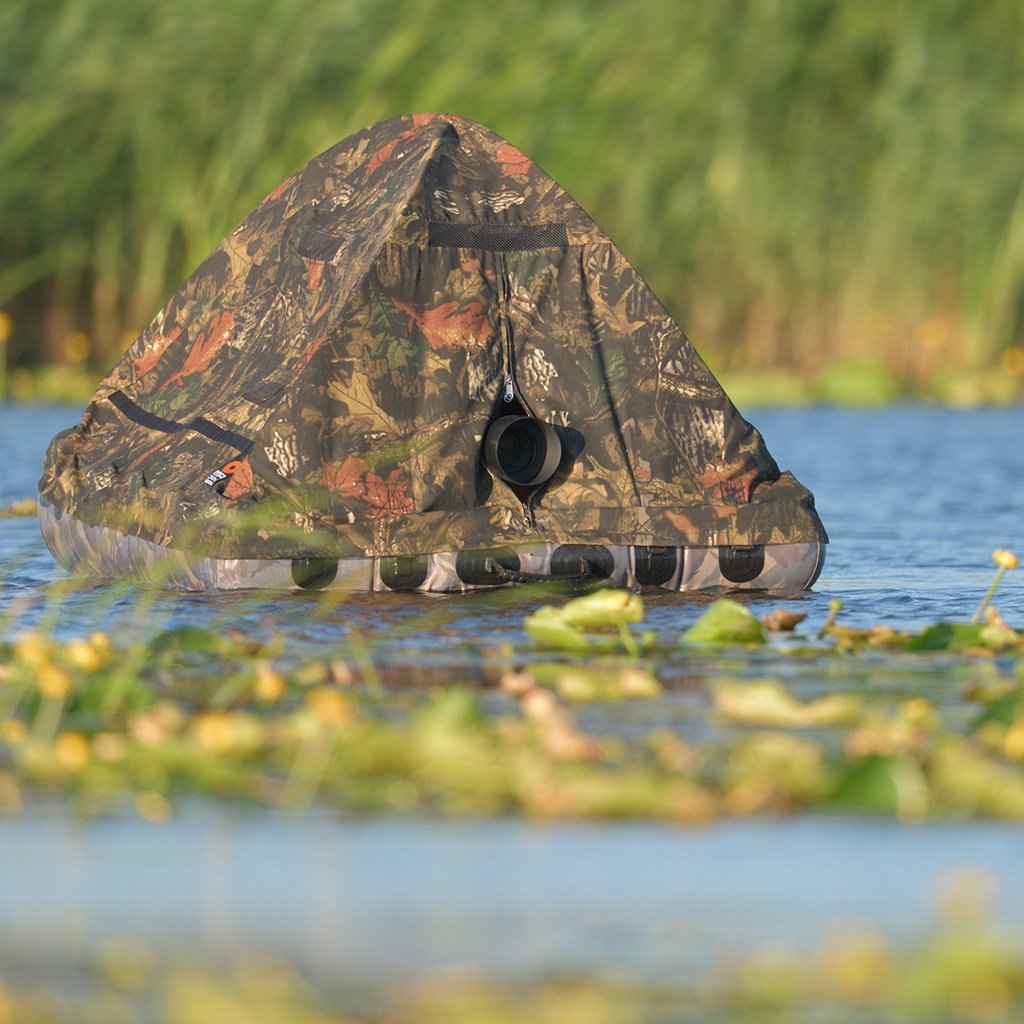
Floating Hide Classic. Photo: Mr Jan Gear
Right now the Classic is my personal favourite. It sits very steadily in the water and gives you a lot of room. At 1.81 m I am quite tall, and that space is exactly what I like about it.
My guests tell me again and again that it is stable, that they like working with it and that they have enough room. Even in wind it is very reliable.
Letting the air out takes a while. For inflating I am lucky to have a compressor, so it is full in no time. With a foot pump it takes a long time, and I can understand why people find that tedious.
The tent is well thought out, with sturdy pole sleeves and windows with magnetic closures. And it is quick to put up and take down.
The Floating Hide 3
The Floating Hide 3 floats on two inflatable tubes with a frame instead of one ring. The mounting plate sits low, and the frame fits together without screws. An anti-splash system keeps the water out at the front.
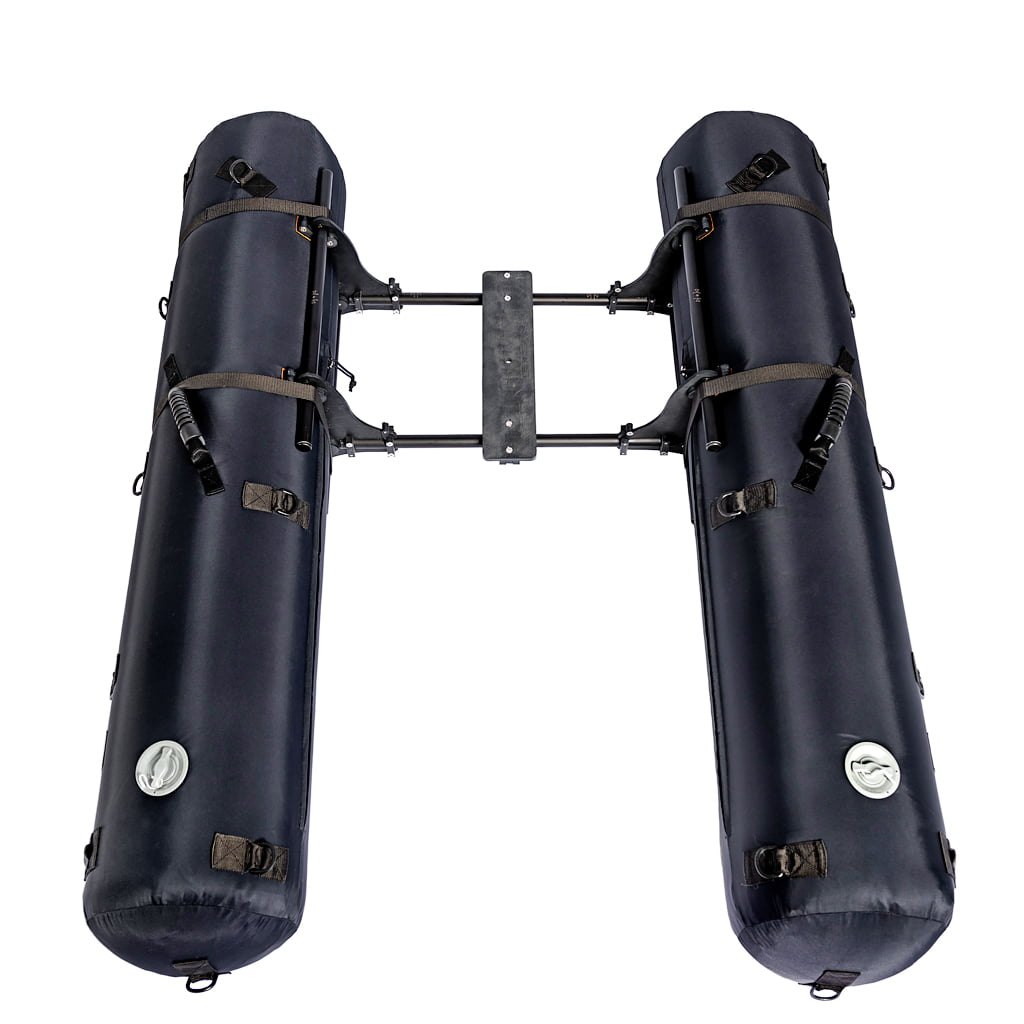
Floating Hide 3: two floats with the frame in the middle. Photo: Mr Jan Gear
Its strong point is the very low shooting position: you photograph extremely close to the water surface. I find it a little more complicated to set up than the Classic.
On my shallow marshes with lots of water plants, the plants like to get caught in the middle construction. That's why I personally prefer the Classic there.
New for 2027: the Floating Hide D
My new floating hide is here. I received the Floating Hide D on 27 October 2026. Guests can test it from the 2027 season.
So far I have unpacked it and set it up. My first impression: it is stable and light, and it is easy to set up. Inside the tent it feels a little narrower to me than the Classic, even though its platform is wider. How the space and handling feel over several hours in the water, only the full test will show.
The platform is flat and packs down small. It is an inflatable drop-stitch platform, the kind you know from stand-up paddle boards: 120 × 96 cm and only 7.5 cm thick. On the Classic you slide in a board for the gimbal. On the D you don't need a separate board, because the mount is built into the platform. You fix a round wooden platform onto it, which looks like a ground pod, and screw your gimbal on. The hull is shaped so that you can support yourself on it well. Two poles hold the camouflage tent, and everything goes into one waterproof bag.
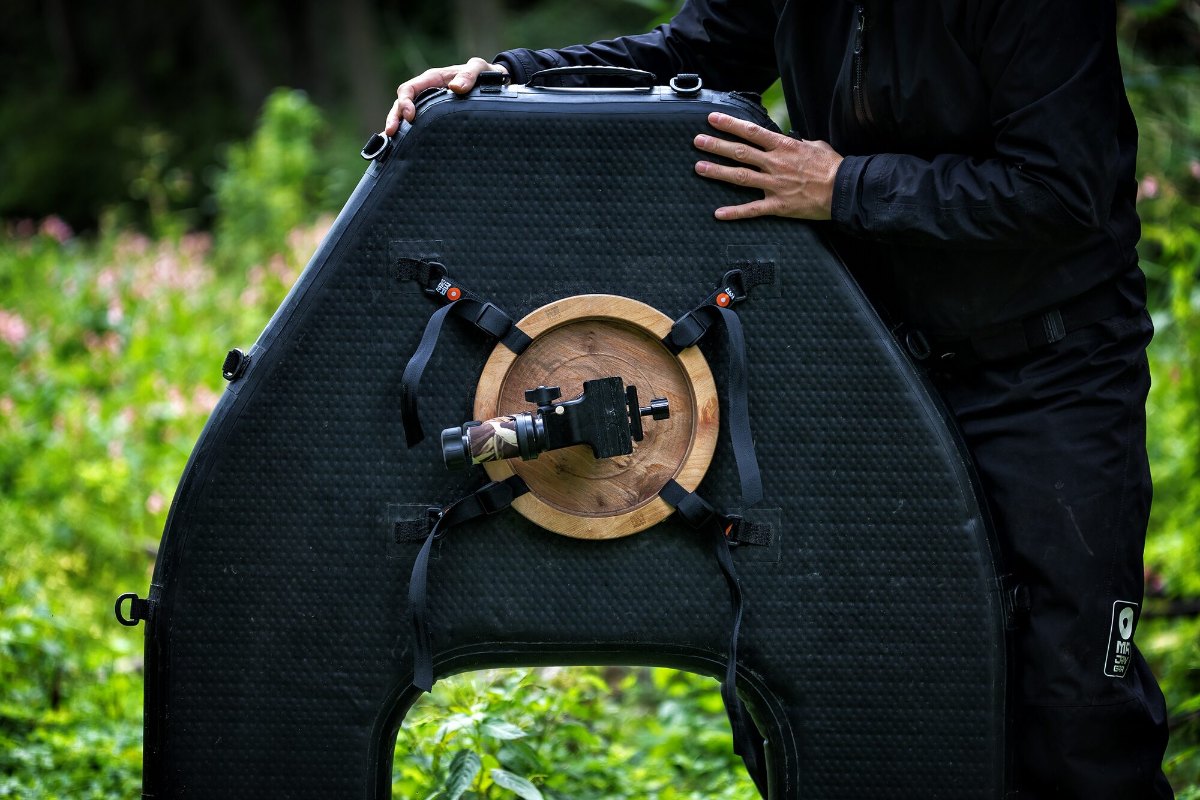
Floating Hide D with the round wooden platform. Photo: Lukasz Boch / Mr Jan Gear
The D is the third floating hide system from Mr Jan Gear, developed together with the American photographer Robert Jensen. According to the maker, you can pull it into position with a strap in shallow water and turn it on deeper water to follow birds, even in flight.
It is hunting season in the Camargue right now, so my test on the water has to wait a little. As soon as it is over, I will test the D under my conditions, and in April 2027 I will report here on how it went. For now, the Classic is still my favourite. But I can imagine the D taking its place in the new season: I already love it, it is very practical.
The three models at a glance
| Classic | Floating Hide 3 | Floating Hide D | |
|---|---|---|---|
| Weight according to Mr Jan Gear | 6.75 kg with float, board and tent; 7.9 kg with transport bag | About 5 kg according to the maker | 4.5 kg without the waterproof bag; 5.75 kg with it |
| Space | Inside 110 × 50 cm | No figure from the maker | Platform 120 × 96 cm |
| My experience so far | My favourite so far. Very stable, roomy and reliable even in wind. | Very low shooting position, close to the water surface. A little more work to set up. On my plant-rich marshes, water plants get caught in the middle construction. | Unpacked and set up. Field report in April 2027. |
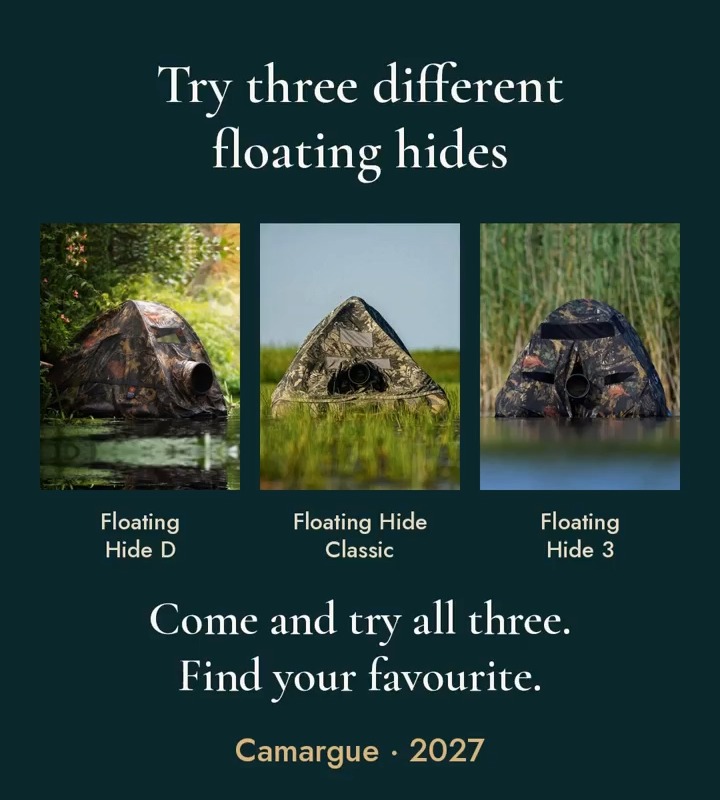
How to test them with me
I have six floating hides on two private marshes: four on the large marsh and two on the small one. The floating hides are in use from the end of February to the end of June, sometimes into early July. A session lasts about four hours. In the evening we start about three and a half hours before sunset, in the morning about 45 minutes before sunrise.
On my marshes the water is up to about 40 cm deep. I provide waders and help you get into the water and set up. Bring your camera, ideally a lens from 400 mm, and your own tripod head, ideally a gimbal. You must bring your own tripod head, I don't provide one. A gimbal makes it much easier, but another head works too. You should be reasonably fit and familiar with the main settings of your camera, because inside the tent you work by feel.
You choose which model you want to use, and you can switch between sessions. If you book several sessions, you can compare them yourself. Think about where your hide will go after the Camargue. For deeper water or other conditions, check the maker's information.
You can read more about a typical session in my article on photographing birds from a floating hide, and which species you can expect in which month in my month-by-month overview.
Questions I often get
Do I need my own floating hide?
No. Hides, tents and waders are provided. You bring your camera, lens and your own tripod head, ideally a gimbal.
What should I bring to wear?
I provide waders. Bring warm socks for the cool mornings in spring.
Can I buy a hide from you?
I don't sell the hides myself. You can order them directly from Mr Jan Gear.
Dates for 2027
Would you like to photograph from a floating hide yourself? Floating hides are part of my multi-day Intensives: the Early Spring Wildlife Intensive in March and April 2027 and the Intensive Camargue Wildlife Experience in May and June, each with accommodation, hides and horse sessions. If you only have a day or two, there are also single Floating Hide Sessions and the Camargue Hide Days. If you want to know which month is best for the species you have in mind, write to me in English, German or French.