Most people know the Camargue in May: warm days, bee-eaters returning from Africa, Camargue mares with their foals in flowering meadows and the first swimmers on the beach. In winter it is different: windier, quieter, full of birds that come from the north to spend the winter.
For me it is one of the most beautiful times of the year. Here is what you can expect between November and February.
Mistral, mild days and dramatic skies
Winter here means wind. The mistral comes down the Rhône valley from the north and can blow for several days. Then it is cold, even when the thermometer says something else. In my experience, though, the temperature hardly ever drops below zero. In between there are calm, sunny days with around ten degrees in the afternoon.
Don't stay at home when the weather looks grey from your window. Heavy clouds over the marshes, rain moving across the reeds. A dark sky on one side, and on the other the sun struggling through the clouds. The mood is simply different.
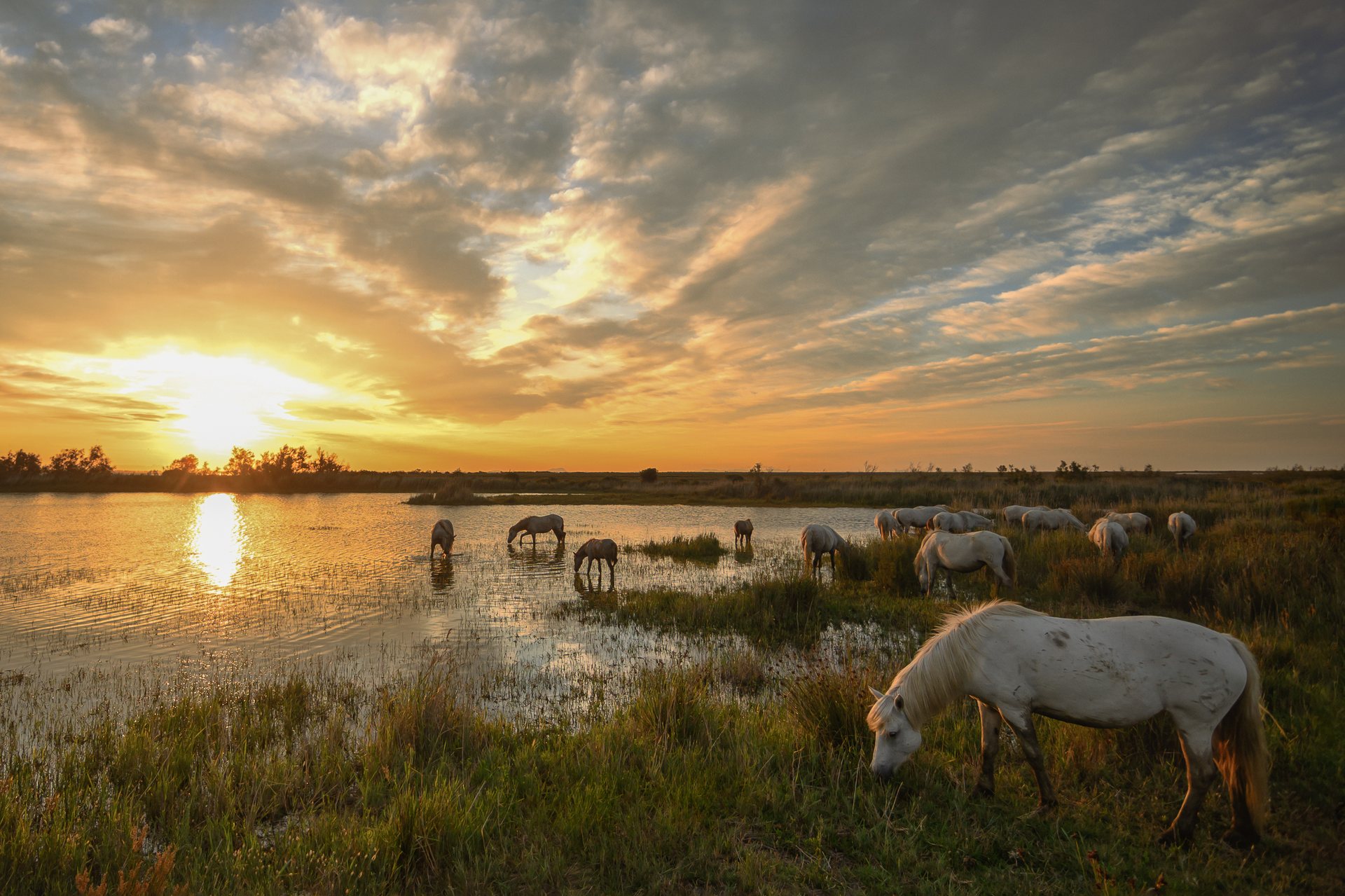
This is the time to photograph animals in the landscape: a group of flamingos under a dark sky, a horse in the marsh, a heron in the rain. The animal does not have to fill the frame. The landscape tells half the story.
And then the sunsets. When the clouds break up in the evening, the sky over the Vaccarès turns orange, pink and violet, and the water reflects all of it.
What to bring:
- A windproof jacket and a warm hat.
- Gloves thin enough to work your camera.
- Time to prepare. The sun sets early in winter. Look around during the day for the place where you want to photograph in the evening, and come early enough to get into position calmly. Stay until the colour is gone.
The cranes are back
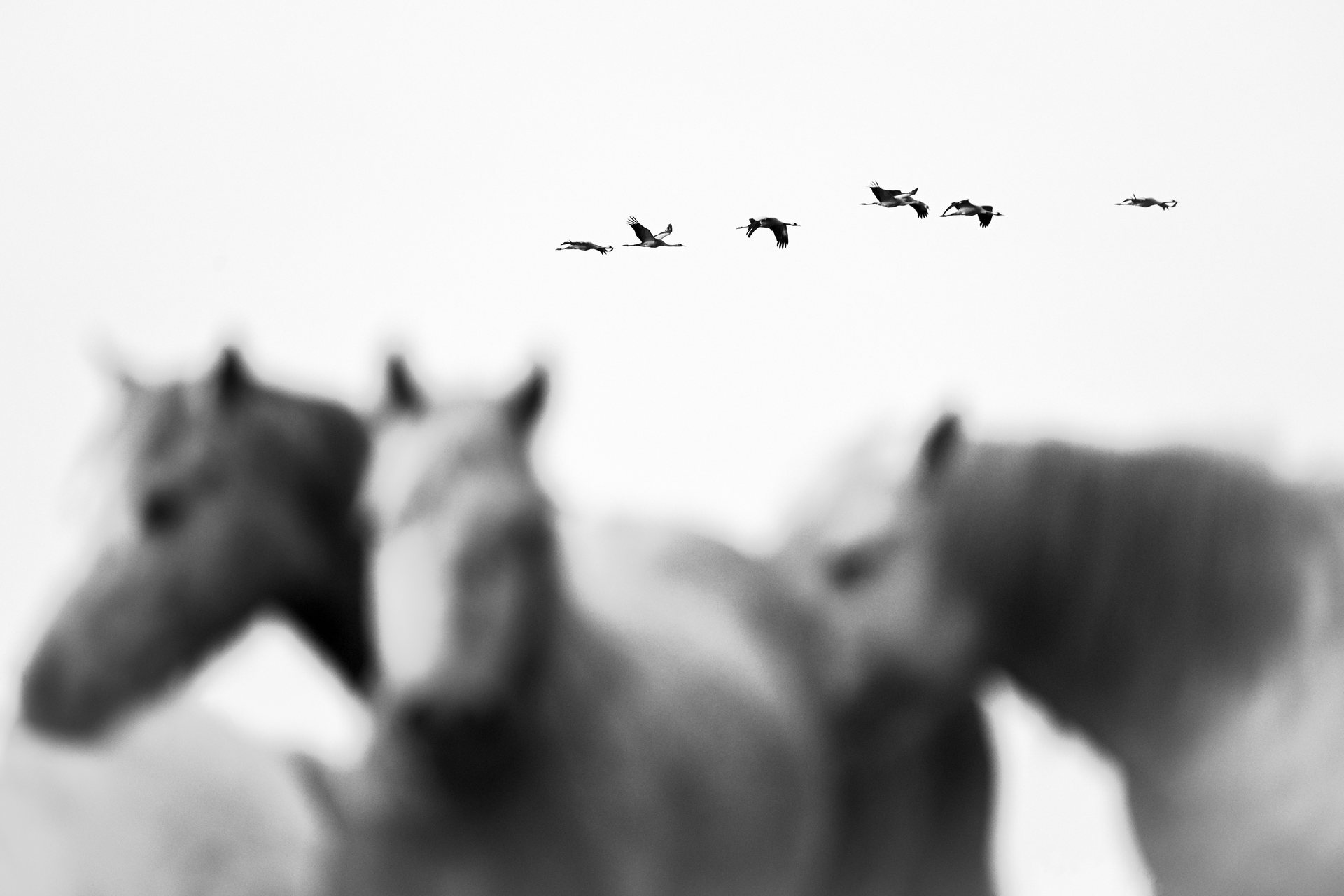
In 2026 I heard the first cranes in the middle of October, and then I saw them. You always hear them before you see them: a loud, trumpeting call from high up, then the long lines in the sky. For me it is the sign that winter has arrived.
Tens of thousands of cranes spend the winter in the Camargue. At the count by the Tour du Valat, the research centre for wetlands in the Camargue, there were just over 36,000 in January 2026. During the day they feed in the fields, in the evening they fly back to the wetlands to sleep.
Flamingos in their brightest colours
Many people think the flamingos leave in winter. Most of them stay here. You find them on the lagoons and in the salt pans, and in the cold months they slowly change. Their plumage turns a stronger pink, and the first groups begin their courtship displays as early as November. In 2026 I watched them on 8 November. You can read more in my article on flamingo courtship in the Camargue.
Did you know? Flamingos wear make-up
Their pink comes from their food, from small crustaceans and algae full of carotenoids. Before courtship the flamingos help things along: with their heads they rub the coloured oil from their preen gland, at the base of the tail, over their neck, breast and back. Spanish researchers in Doñana observed that they do this much more often in the courtship season. Once breeding starts, they stop, and the colour fades again.
And the flamingos are not the only ones that stay. You can also see the odd hoopoe in winter.
Raptors over the marshes
For me the most exciting thing about the cold season is the raptors. Many come from the north, pass through or stay for the winter. Marsh harriers and hen harriers hunt low over the reeds. Common buzzards, kestrels and merlins sit on posts and in the trees along the roads. With some luck a peregrine passes over the marshes. A few booted eagles spend the winter here, and with a lot of luck you will see a greater spotted eagle.
If you see one, it is a special day.
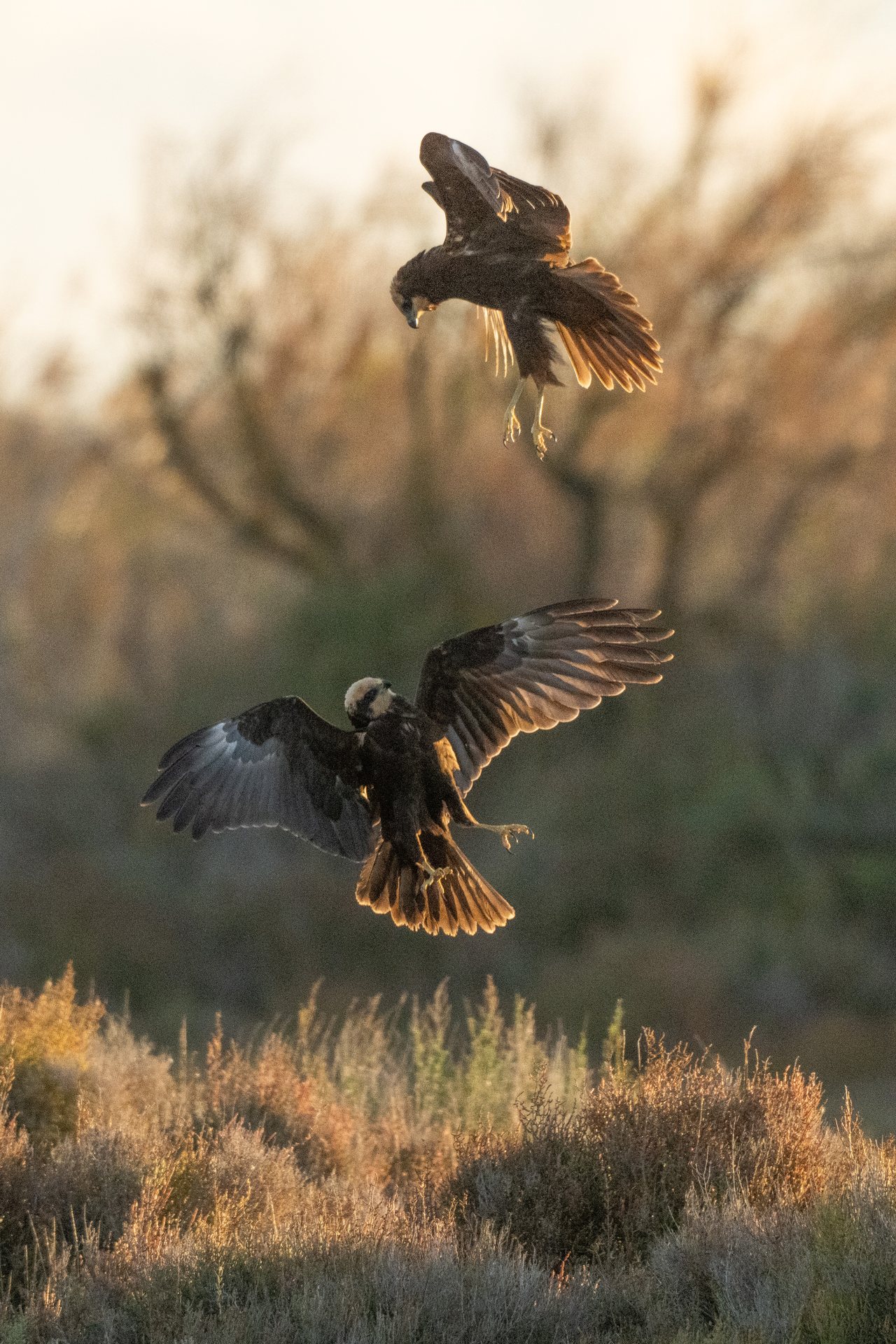
As a falconer I look at them with different eyes. You can read more about Tina, Elvis and my life as a falconer in my article on falconry.
Owls: easier to find in winter
I see barn owls regularly in winter, and with a lot of luck a short-eared owl. It comes from the north and, unlike most owls, also hunts in daylight, low over marshes and meadows. In winter long-eared owls often roost together, well hidden in the tamarisks. The little owl lives here all year, around old walls and farm buildings, but sadly it is becoming rarer and rarer in the Camargue.
Owls are easier to find now partly because the trees are bare. An owl on a branch stands out. And because the days are short, dusk falls while you are still out with your camera.
If you find an owl, keep your distance and do not stay long. Don't flush it, not even for a photo.
Horses in their winter coat
The Camargue horses live outside all year. In the cold months they grow a thick coat. In the cold morning light or after rain, with a wet coat, they are a completely different subject from the horses running through the sea in June.
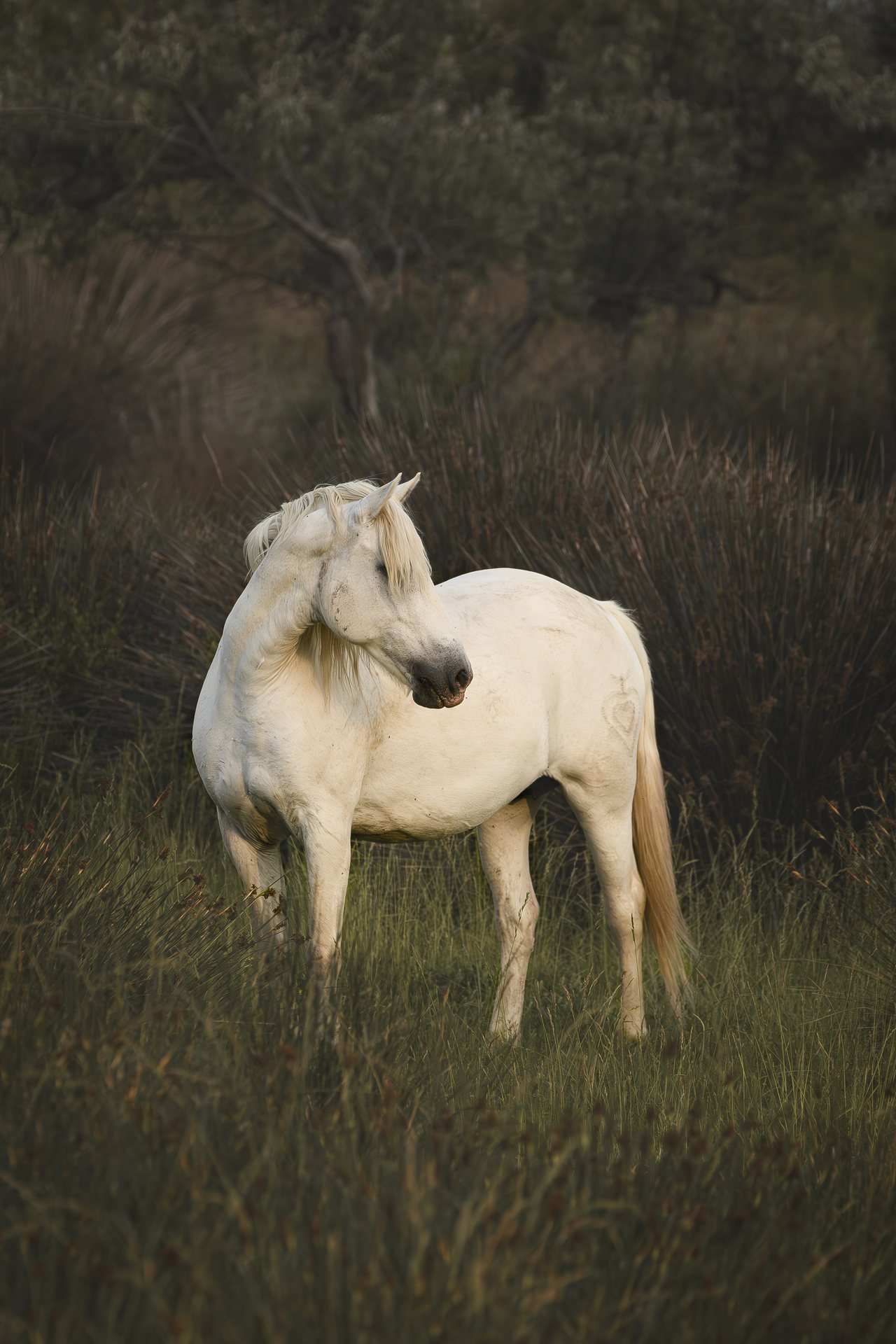
I don't offer horse shoots in winter. You will still see horses, on the pastures along the roads. Please stay on the road, do not walk onto the pastures and do not feed the horses.
November festivals: Fête de la Maintenance and abrivados
In November there are two days I would plan a trip around: the Festival d'Abrivado in Saintes-Maries-de-la-Mer. Traditionally it takes place on 10 and 11 November.
Abrivado is Provençal and means something like “arrival with momentum”. In the past the gardians brought the bulls on horseback from the pastures to the arena. To keep a bull from breaking away, the riders close in around them and gallop off. The young people from the village, the attrapaires, try to break up the group and set a bull free.
At the festival the abrivados run along the beach, from the Plage Est to the arena in the village, one manade after another. Watching is free.
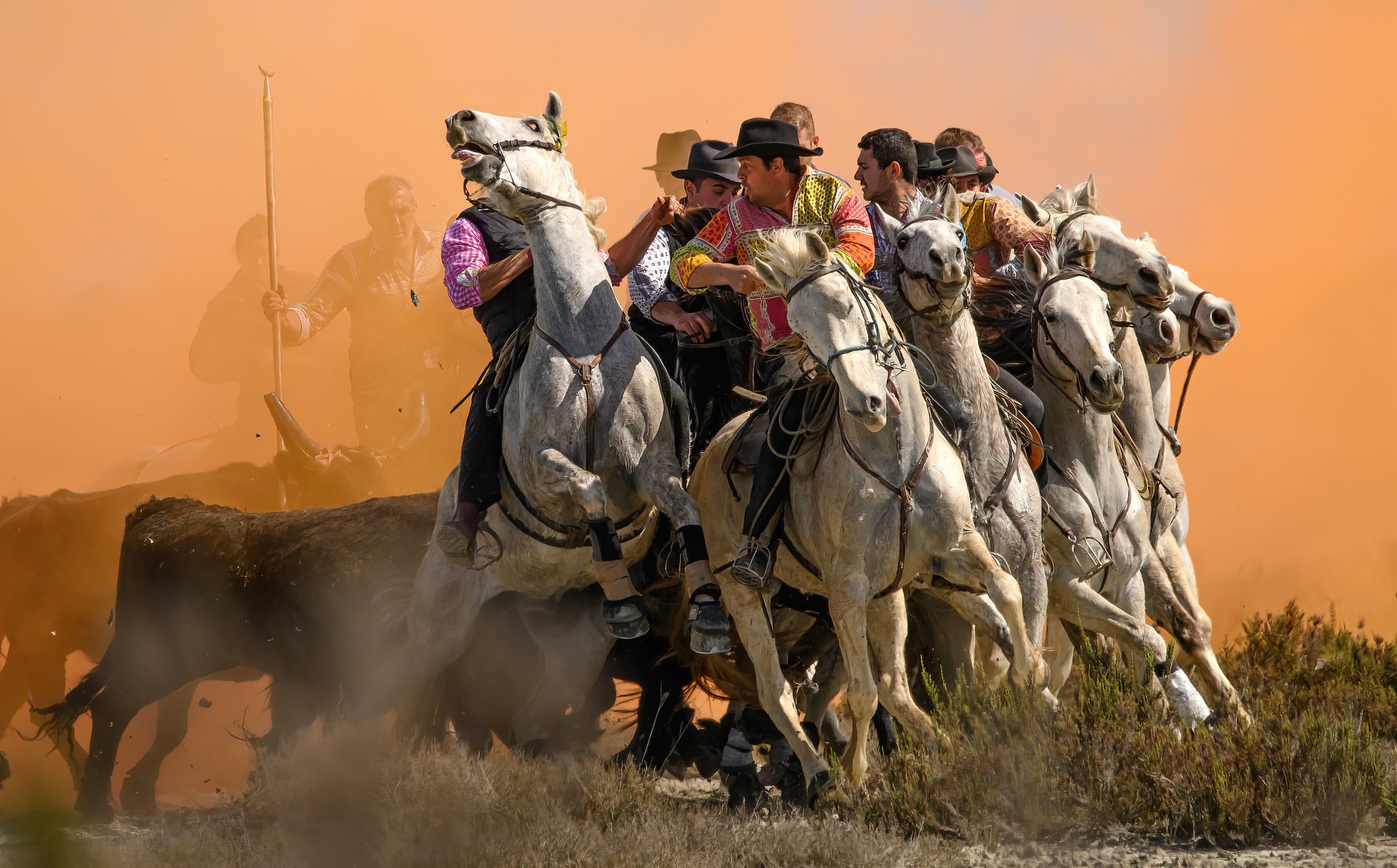
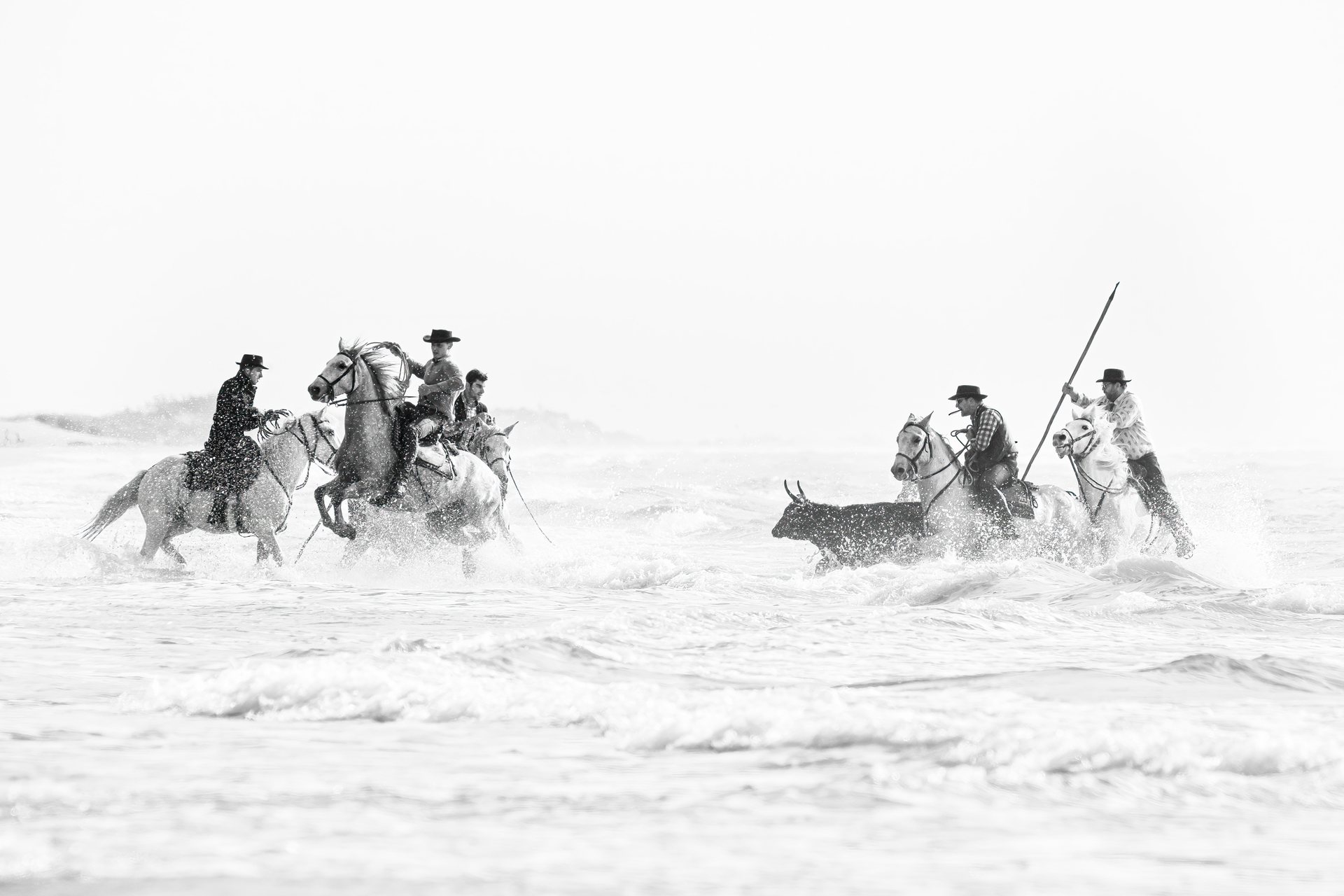
It is a strong subject for photographers. But take it seriously. The bulls are fast. Keep your distance from the route and follow the organisers' instructions.
The tourist office in Saintes-Maries-de-la-Mer publishes the programme shortly beforehand each year, so check with them before you travel. In 2025 the festival was cancelled because of lumpy skin disease, a viral disease in cattle.
About a week before the Abrivado festival, in early November, Saintes-Maries celebrates the Fête de la Maintenance. The day starts in the morning with a ferrade contest at the Bouvaù d'Aubanel, with many manades taking part. Around 11 am the gardians ride in a parade to the arena, followed by an abrivado through the village. In the afternoon the final of the Courses de Taù takes place in the arena.
You can read more about the festivals of this season in my article on the Camargue in autumn.
Hunting season: stay on the paths
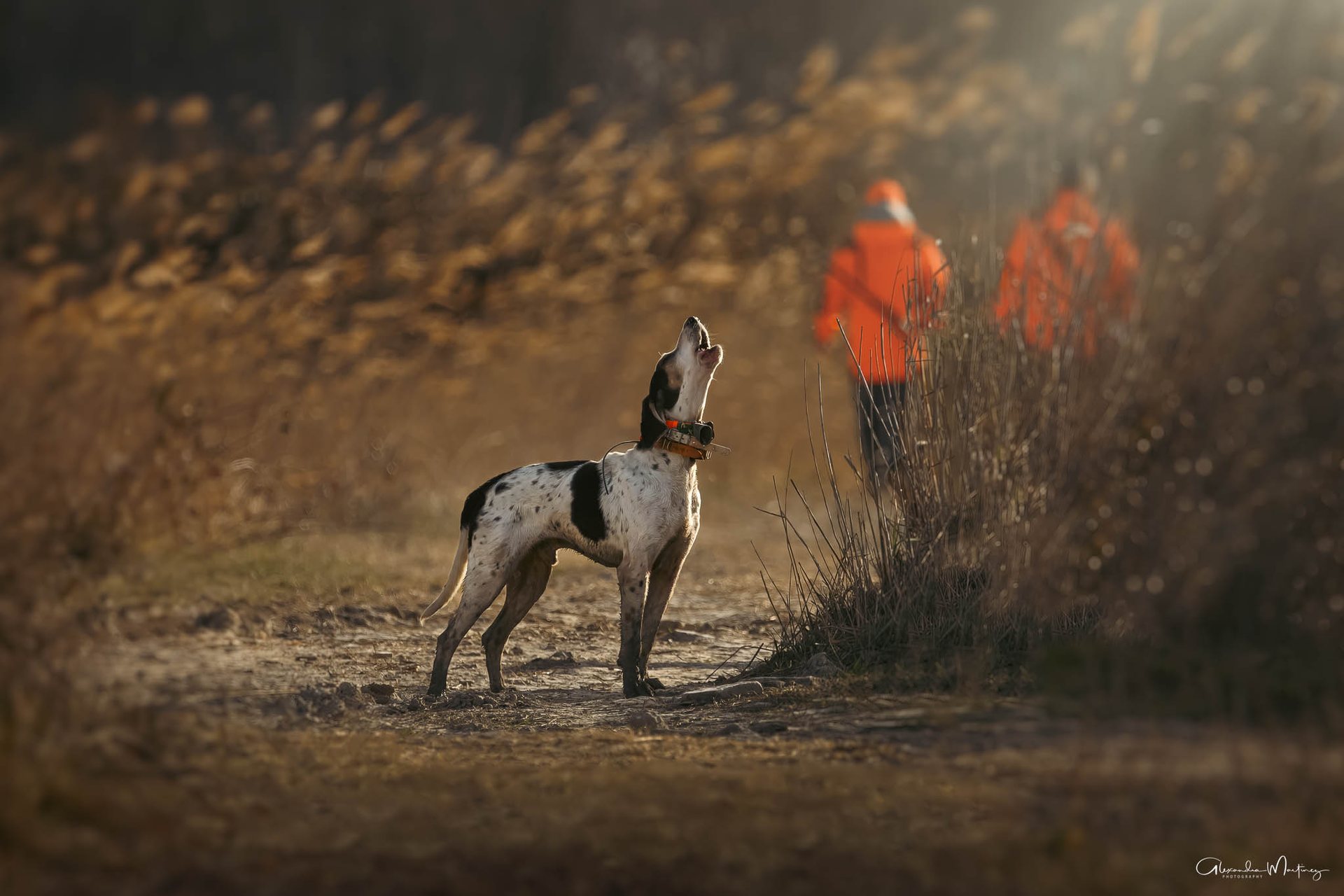
In winter you are almost alone on the beaches and roads. Not in the marshes. Waterfowl hunting starts on 21 August, and the hunting season runs until the end of February.
Much of the Camargue is private land and hunting ground. Stay on public roads and marked paths, respect signs saying “chasse gardée” or “réserve”, and do not walk into the marshes on your own. I hunt myself with my Harris's hawk, so I say this without judgment. It is part of the Camargue in winter.
From March it starts again
From March my photography season starts again. In my Early Spring Wildlife Intensive we photograph raptors and flamingo courtship before the bee-eaters return. In my experience they are usually back at the Mas around 20 April.
You will find the dates for my multi-day Intensives, hides and horse shoots on the 2027 page, and information on travel and accommodation under Practical Info. If you would like to know which time of year suits the subjects you want to photograph, write to me in English, German or French.